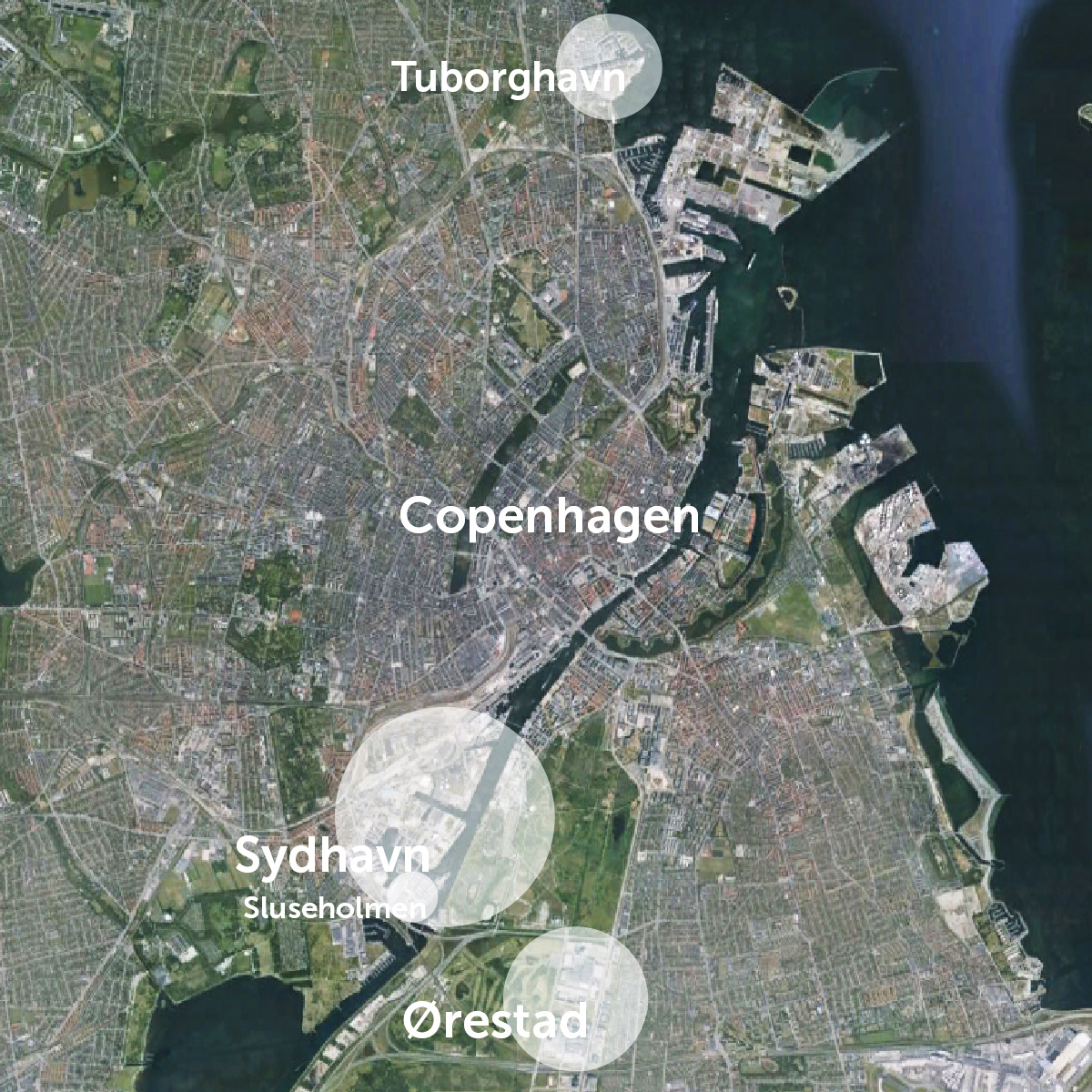
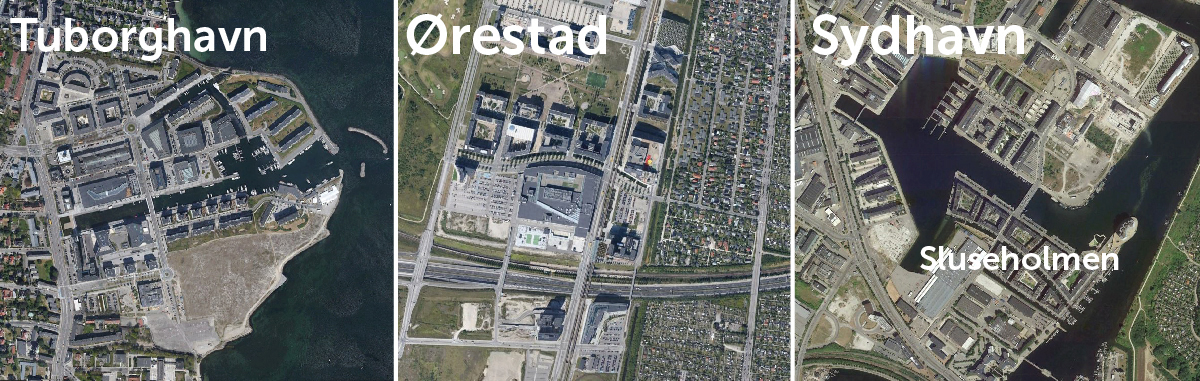
background images: Google Maps
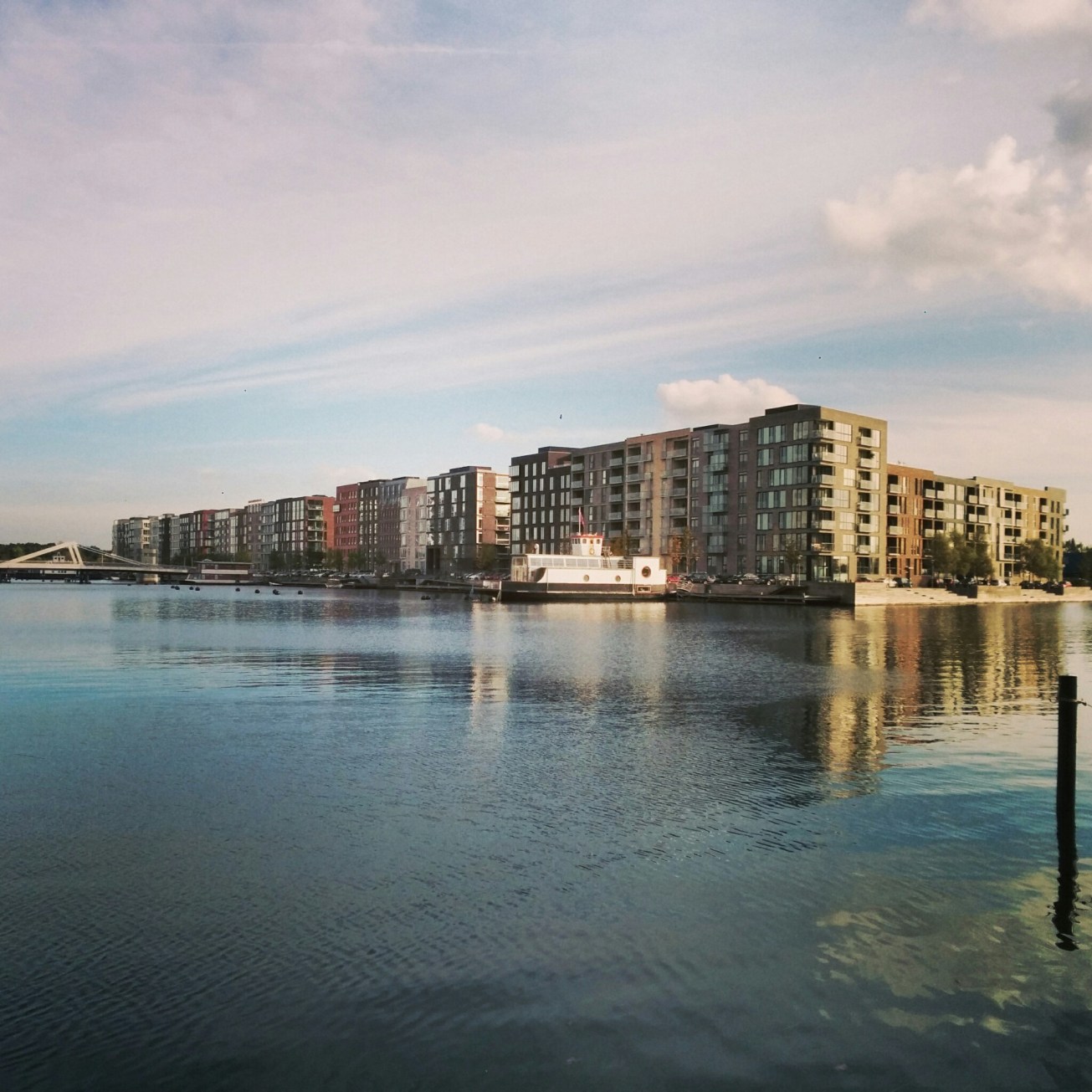
Denmark, Copenhagen specifically, has been a locus of well-considered large scale urban development/design projects for the past couple decades. Since beginning my studies in urbanism in Montreal, several years ago, the Danish experiments at Ørestad , Tuborghavn, and Sydhavn have been on my list to visit. I should point out that they all are situated quite differently: Ørestad is located inland, at a strategic point of intersection of major transport networks that link the city to Sweden and the Airport; Tuborghavn is located on the northern edge of the city, on the waterfront site of a former Tuborg distillery; and, Sydhavn is located to the south, on a series of disconnected small and large harbour piers. Given these different contexts, each design is understandably quite different. Some of the similarities however, are, in my mind, signs of the unexpected weaknesses in contemporary, or neo-liberal, Danish urban design: all projects contain a shopping mall near their centre, all projects have, to differing degrees, separated clusters of office buildings, keeping in mind my previous post on Danish office buildings, and all projects exhibit mostly monolithic pieces of architecture surrounded by open spaces, resulting in an often lackluster public realm. This last point is great for archi-tourism, but is a questionable urban design strategy. The one standout exception to this monolithicness is Sluseholmen, a distinct area within Sydhavn, which was evidently inspired by both historic and contemporary Dutch urban design. Here, the unique identity of a single piece of architecture is sacrificed for the functional and aesthetic identity of the whole: the unrelenting, yet elegant, perimeter block massing.
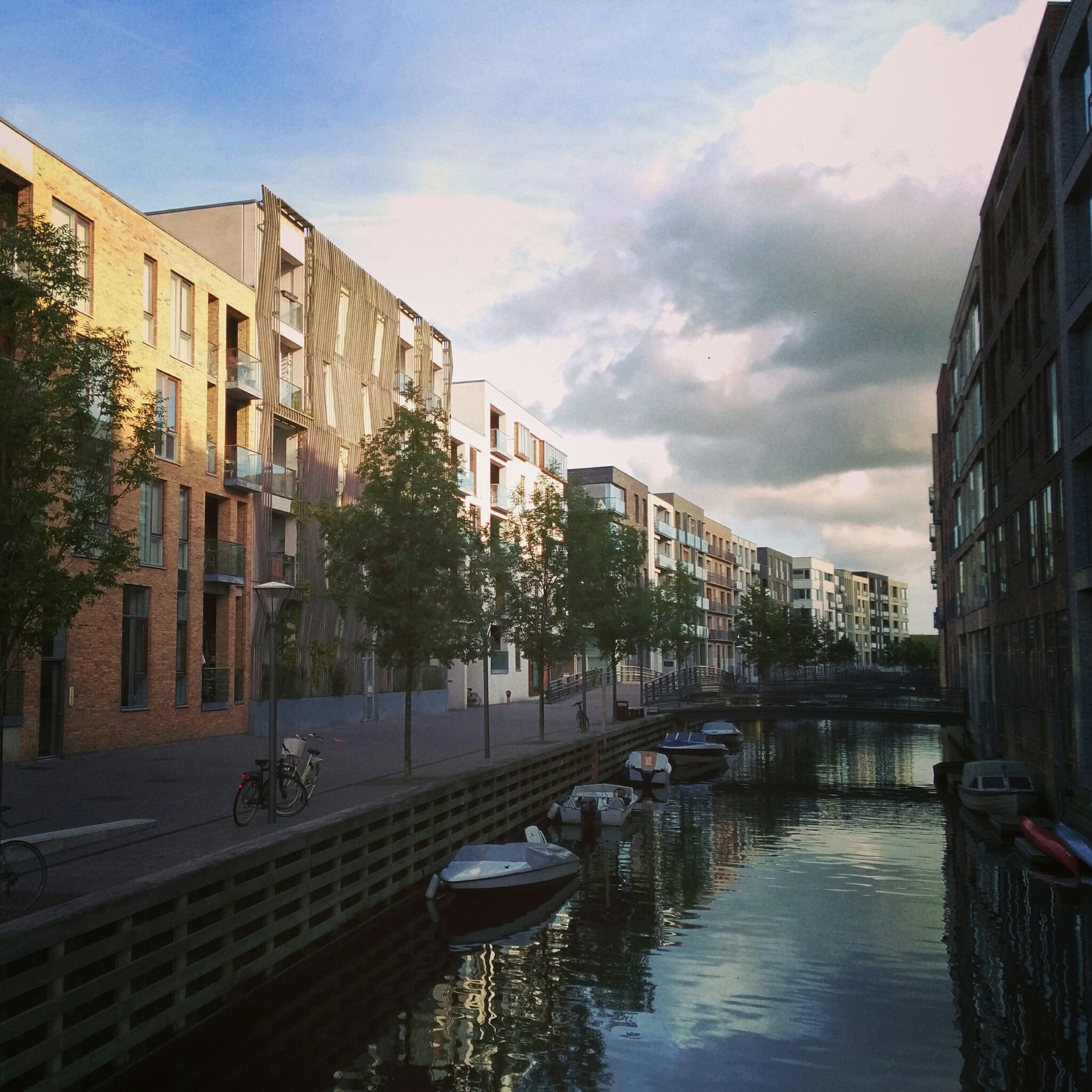
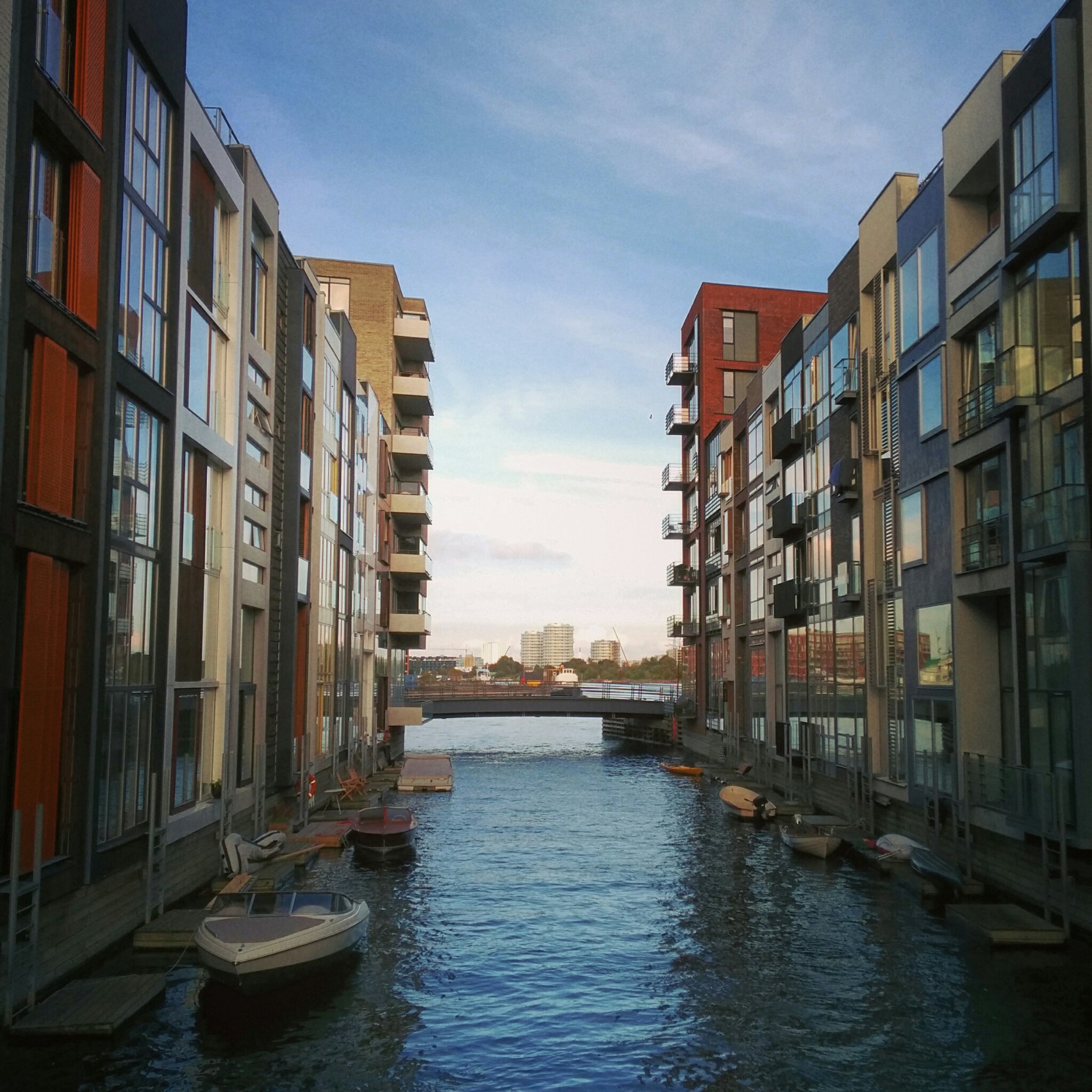
Each perimeter block in Sluseholmen is nuanced with varied façades, unit types, and overall heights. What determines these characteristics are parametric (in the traditional not the arhcispeak sense) responses to context: the particularities of the adjacent fabric, sunlight, wind, etc. Specific steps were made in the design process to assure that the simple massing appeared as varied as its interior compositions. For example, townhomes, though they share party walls, each exhibit unique identities, and mid-rise apartments change facade composition for each area served by an entrance, appearing as distinct architectures. This unique design approach yields very well-contained human spaces, spaces that beg you to admire the whole over the parts, while still enjoying the parts.
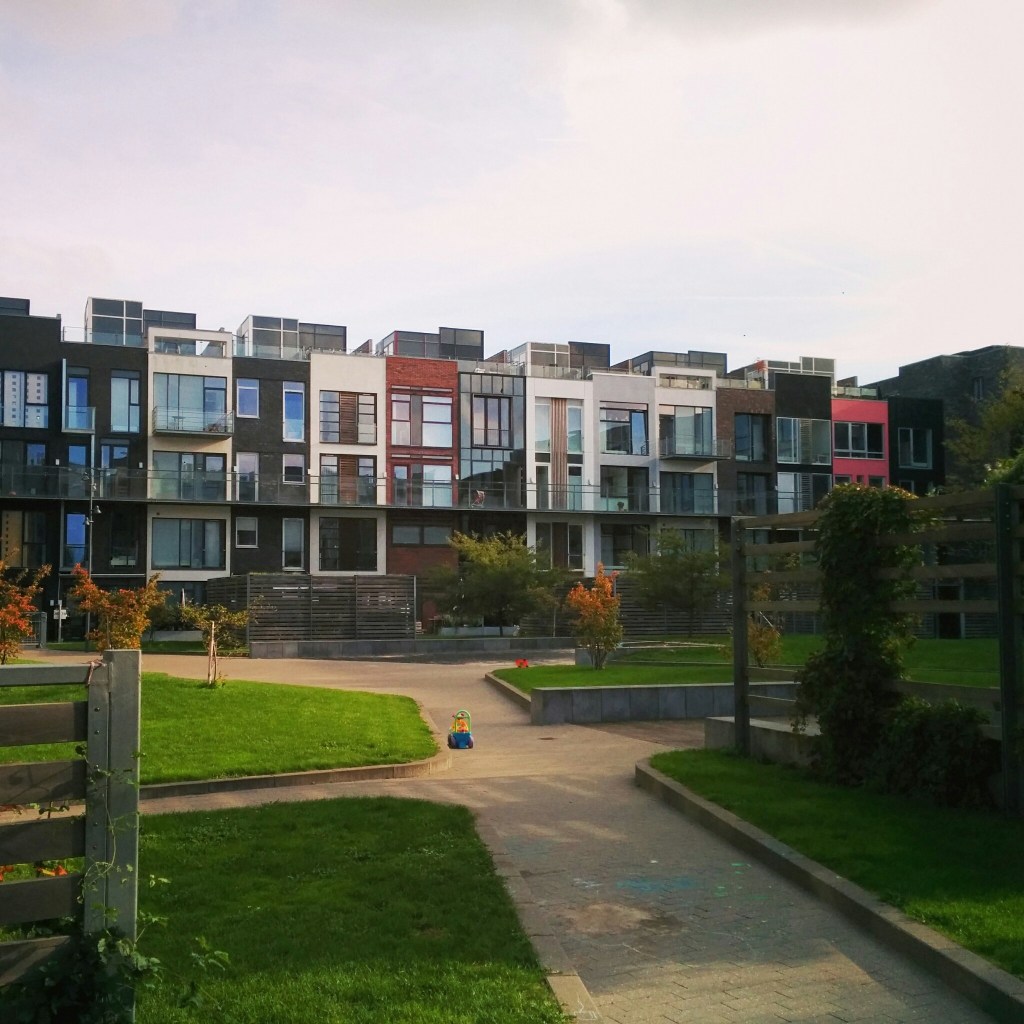
To me, what was most impressive in Sluseholmen was its beautifully nuanced open space network. From a single main through street, to the canal side collector and perimeter streets, to the narrow canals, to the beautifully designed and programmed courtyards, the open space system in the area is masterfully designed. Each space feels perfectly scaled, and promotes specific flows and interactions: commerce on the through street, casual strolling on the collectors, children playing and adults relaxing in the courtyards. The permeating domesticity of these area however is thick, and perhaps leads to its only flaw. Sluseholmen, is predominantly residential (>95%), I can only imagine that if schools, offices, and more retail spaces were included in the area, this thick and observant domesticity would have afforded more anonymity in the public spaces. One feels a bit too observed in the area, and I can only imagine how that would feel in the evenings, especially as an adolescent, or young adult.
Regardless of its programmatic shortcoming, Sluseholmen is a beautiful treatise on urban design’s capability to produce human-scaled spaces through the co-presence of variety and restraint.
 observations